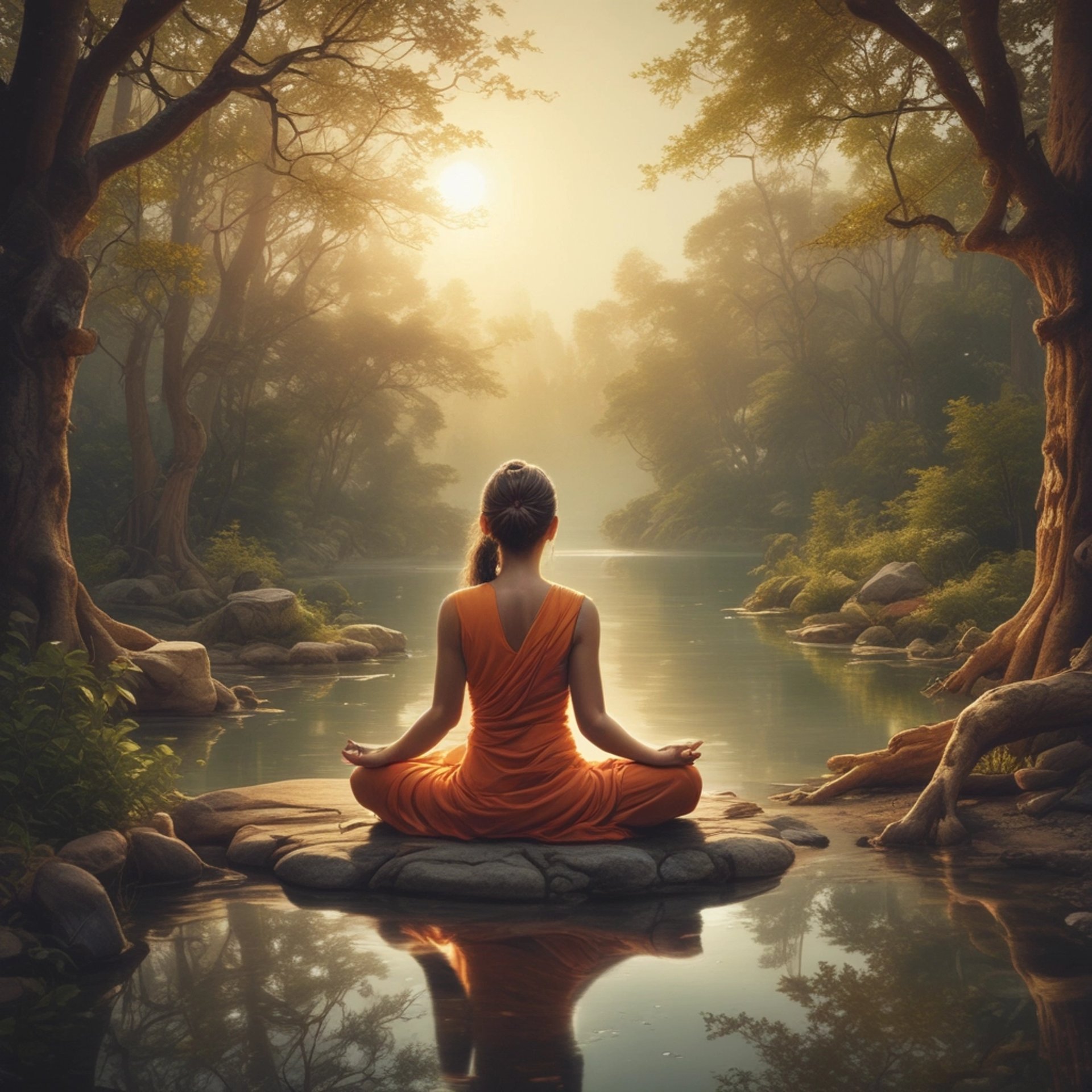
Meditation
To understand the changes caused by non-routine activities, we sit in a quiet place and observe the cycle of expectations within our minds.
This act of watching our thoughts is known as meditation.


The Process:
1. Begin by observing any object within the surroundings.
2. Slowly move the gaze from the top of the object to the bottom, without letting any thoughts in.
3. Now observe the same object from the left side to the right side.
4. While doing this, notice the object’s colour, shape, texture, and overall profile, without analysing or going into details.
5. Shift the attention to another nearby object and repeat the same steps as above.
6. During this practice, if any thoughts appear, try to recall them. If possible, write them down on paper or in a notebook.
7. By continuing the practice further, more thoughts may begin to cross the mind.
8. Note down all such thoughts and get ready for the next stage of trimming these thoughts.
Understanding Meditation
Learn about various meditation styles and how to practice each one mindfully for the best results.


FAQs
What is meditation?
Meditation is a practice of focusing the mind to achieve calm and clarity.
How do I start meditating?
Begin with short sessions, find a quiet spot, and focus on your breath or a simple mantra.
What are different meditation types?
There are many types like mindfulness, loving-kindness, transcendental, and guided meditation, each with unique techniques.
How long should I meditate?
Start with 5 to 10 minutes daily and gradually increase as you feel comfortable.
Can meditation reduce stress?
Yes, regular meditation helps calm the mind and lowers stress levels effectively.